Home Visits Across Bangalore
Sun – Sat : 8:00 am to 8:00 pm
neuronrehabilitation@gmail.com
Home Visits Across Bangalore
Sun – Sat : 8:00 am to 8:00 pm
neuronrehabilitation@gmail.com
May 14,2026
25+
img-post9

Neck pain is no longer a condition exclusive to older adults. In Bangalore’s fast-paced tech and corporate environment, young adults between 20 and 40 are increasingly reporting persistent neck pain, stiffness, and headaches — largely due to prolonged screen time, poor posture, and high stress levels. The good news is that effective, non-invasive remedies exist. Heat therapy combined with targeted physiotherapy is one of the most clinically supported and practical approaches available — and at Neuron Rehabilitation, we bring both directly to your home.

We treat a growing number of young professionals and students suffering from what is now commonly referred to as ‘tech neck’ — a postural syndrome caused by hours of looking down at phones and laptops. If you are in your 20s or 30s and waking up with a stiff neck, getting headaches at the base of your skull, or feeling tension across your shoulders, this article is for you.

What Causes Neck Pain in Young Adults?

Forward head posture — for every inch the head moves forward from its neutral position, effective weight on the cervical spine doubles, overloading neck muscles and compressing spinal joints
Prolonged static postures — sitting at a desk or looking at a phone for hours without movement causes muscle fatigue and spasm
Stress and tension — anxiety causes people to subconsciously raise and tighten their shoulders, creating chronic trapezius and neck muscle tension
Poor sleeping position — sleeping on the stomach or with too many pillows strains the cervical spine
Lack of movement — a sedentary lifestyle weakens deep neck stabilisers, leaving larger surface muscles to overwork and fatigue

Heat Therapy — Simple, Effective, and Scientifically Supported

Heat therapy (thermotherapy) is one of the most accessible and effective tools for neck pain
caused by muscle tension and stiffness. Here is exactly how it helps:

Increases blood flow to tense muscles, delivering oxygen and nutrients while flushing out metabolic waste products that cause soreness
Relaxes muscle spasms and reduces the stiffness that makes turning the head painful
Calms the nervous system, reducing the pain perception signal sent to the brain
Prepares muscles and connective tissue for stretching and physiotherapy exercises — making them more responsive and comfortable

How to use it at home: Apply a warm (not hot) heat pack or hot water bottle to the neck and
upper shoulders for 15–20 minutes. A warm shower directed at the neck is also effective,
especially in the morning when stiffness is worst. Important: do not apply heat to an acutely
inflamed or swollen injury within the first 48–72 hours — use an ice pack first, then transition to
heat as the acute phase passes.

bg1-ss2-h1

How Physiotherapy Addresses the Root Cause

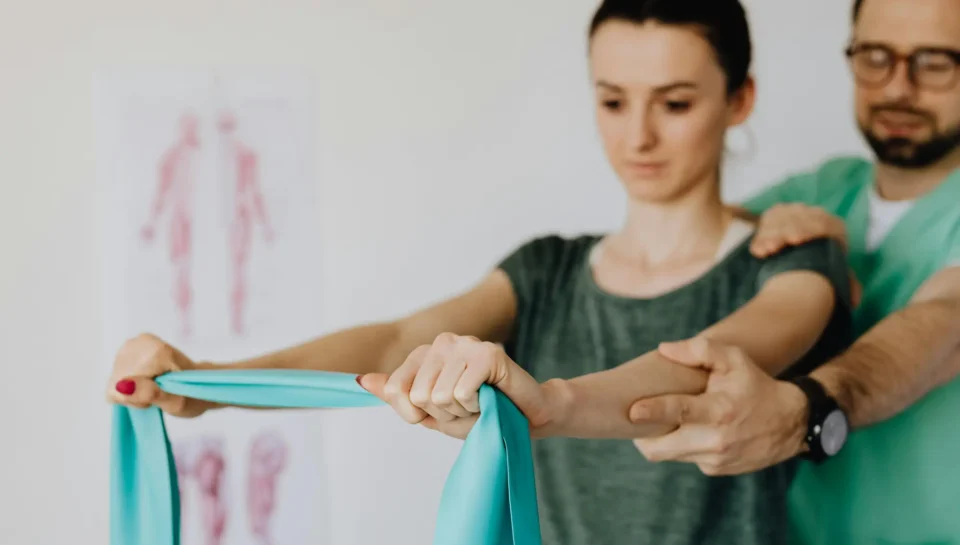
Heat therapy provides excellent relief — but it works best as a preparation for physiotherapy, not a replacement for it. While heat relaxes the surface tissue, physiotherapy addresses the underlying muscular and postural causes that keep bringing the pain back. At Neuron Rehabilitation, our physiotherapists use a structured approach for young adults with neck pain:

Manual Therapy: Gentle joint mobilisation of the cervical and thoracic spine restores movement and reduces joint stiffness that heat therapy alone cannot reach.
Deep Neck Flexor Strengthening: The deep neck flexors — the longus colli and longus capitis — are the muscles most responsible for holding the head in its neutral position. In tech neck, these muscles weaken significantly, and targeted exercises to retrain them are central to lasting recovery.
Postural Correction Exercises: Chin tucks, scapular retractions, and thoracic extension exercises correct the forward-rounded posture that drives tech neck, rebalancing the entire upper body.
Ergonomic Assessment: Our home visit model allows us to assess the actual workspace — monitor height, chair setup, phone habits — and make practical recommendations that reduce daily strain on the neck.
Personalised Stretching Program: A daily stretching routine targeting the upper trapezius, levator scapulae, and pectoral muscles is prescribed to maintain the gains achieved in each session.

What to Expect from Treatment

A typical session begins with heat application to relax the tissue, followed by hands-on manual therapy to restore joint movement, then targeted exercises to retrain the deep stabilising muscles. Most patients experience significant improvement within 4–6 sessions, with long-term resolution achieved through a course of 8–12 sessions and consistent home exercise.

Who Is This Approach Best For?

IT professionals, software engineers, and desk workers spending 6+ hours daily at a screen
Students with prolonged study and phone use habits
Young adults with frequent tension headaches or headaches at the base of the skull
Anyone who has tried pain medication for neck pain without lasting results
Those who want a drug-free, movement-based solution to chronic neck stiffness

Neck pain in young adults is both common and highly treatable. You do not have to accept it as a consequence of a busy modern life. With heat therapy and expert physiotherapy — delivered at your home across Bangalore — you can find lasting relief and get back to feeling your best.

Make a Comment